


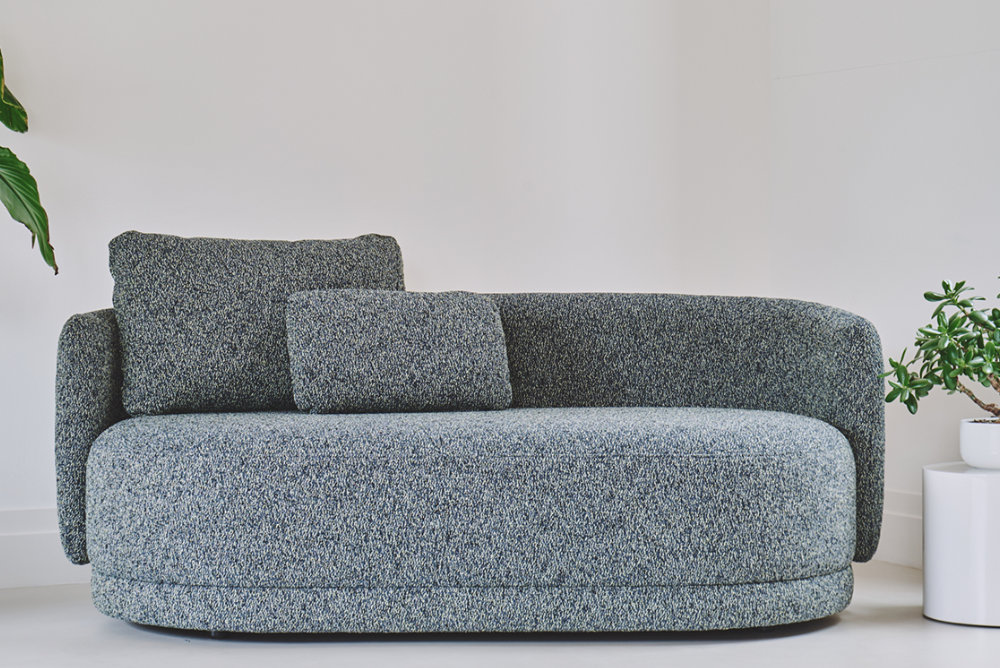
Firmer, More Supportive Cushions – It’s the Way to Go
When you’re trying out sofas in a shop, you’ll find yourself considering both firmer and softer cushions. It can be tempting to go for the soft option if you’re tired after a long day of shopping. But what feels comfortable in that initial fall-into-a-sofa experience isn’t always the most comfortable option over time.
For support, durability and long-term comfort, firmer seat and back cushions are the better option – paired with bedding-in scatters. In our opinion, they offer a better combination of comfort and style. Read on as we explain why.
Firm vs soft cushions: the basics
While sofa cushions can range in firmness, they can generally be categorised into two broad types – soft and firm.
Soft cushions typically rely on duck feathers or down. Both of these fillings make the sofa seats squashy and soft. However, the feathers will tend to move and flatten within the cushion as they are sat on, so the cushion will have to be lifted up and shaken to return to its original shape (if this can be achieved).
In contrast, firmer cushions often use a combination of foam and fibre wadding. Typically, foam is in the core of the cushion, while wadding is used on the surface to provide a softer initial feel and sit – and to help the cushion remain full and fitted.
High-quality foam cushions may have layers of foam of different types to provide just the right level of resilience, density and comfort. Materials such as reflex foam evenly spread your body weight and reduce pressure points.
This is used in conjunction with a wrap – for example, a Dacron wrap is often used to:
-
Create a sharper and more fulfilled appearance
-
Reduce wrinkles from your cushions, ensuring the cover fits neatly over the cushion
-
Add a softer top layer to the cushion
The importance of ergonomics and support
There are three reasons why a firm sofa will provide longer-term comfort than the momentary comfort of a feather-filled soft cushion.
Shape
Firstly, as we’ve mentioned, a soft cushion will squash over time as it’s sat on. The initial moments of softness will then be replaced by discomfort as the cushion is pushed out of shape. You’ll have to get up and re-plump, which is neither comfortable nor convenient.
Longevity
Secondly, a firm cushion simply has a longer lifespan in terms of providing structured support. Eventually, a soft, feather-filled cushion will no longer plump up as it once did. It will become malformed and flat just where you need softness and resistance. But a foam cushion made of high-quality foam will keep its shape for years, remaining supportive as it’s designed to return to its original shape.
Support
Thirdly, true comfort also means ergonomics and support for the body. Research suggests that, on average, people in the UK spend between 15 and 20 hours each week sitting on their sofas. It’s unquestionable, then, that consumers need sofas that will support their bodies and prevent issues that stem from poor ergonomics and posture.
Think about it this way – you wouldn’t put feathers in a car seat. Although, yes, you want to relax more on your sofa than when you’re driving, your body’s frame always has the same needs for support. A seat that’s too squashy and not supportive to your back can feel cosy in the short term, but it can ultimately be much less comfortable in the long term.
What happens to your body when you sit on a soft sofa?
When you’re sinking into a soft, squashy seat, you tend to lean forward and hunch over. Slouching in this way can create strain in your shoulders and back, harm your muscles, ligaments and spine, and increase poor posture.
A firmer seat allows you to sit up straighter in a more natural position for your spine and muscles. This can save you from back and neck pain on a daily basis and in years to come.
Don’t forget appearance
Soft cushions’ problem with keeping their shape isn’t just an issue of comfort. It’s also one of appearance. When everything else in your room is carefully styled, you don’t want an out-of-shape, squashed sofa to spoil your look. It’s also a pain to keep plumping up feather cushions.
Firm cushions, however, will maintain their form, giving your sofa an appearance of newness and neatness. Your sofa will draw the eye for the right reasons – because of its beauty – rather than because it’s become an eyesore.
Do soft cushions have a place?
All this being said, there is a role that soft cushions can play in keeping you cosy.
They shouldn’t be the main cushions of the sofa. But squishy scatter cushions can be fantastic to add even more support as well as a homely feeling.
If you’re curled up on your sofa reading or watching TV, a soft scatter cushion can be just perfect when tucked at your side or under your head to help you relax. This works just the same way as a firm bed mattress and neck pillow combined with some scatter pillows to add softness here and there.
That’s why British Design Shop also supplies a variety of soft scatter cushions to complement your sofa’s look and help you snuggle up in comfort.
Get long-term comfort without the constant need to constantly plump seat cushions
At British Design Shop, we use only firmer, supportive seat and back cushions in our range of stylish, supportive sofas. Our locally handcrafted sofas are designed and built to last – and that means using premium-quality firm cushions that will keep their shape, support and good looks for years.
If you’re looking for a luxury sofa that offers contemporary beauty and lasting comfort, our range of two-seat, three-seat and modular sofas is for you. Our bespoke service ensures that you get a sofa that suits you perfectly, made through the best of British craftsmanship.
If you would like to find out a bit more, just get in touch with us through our contact form. You can also contact us by email at [email protected] or by phone at 01926 266075.